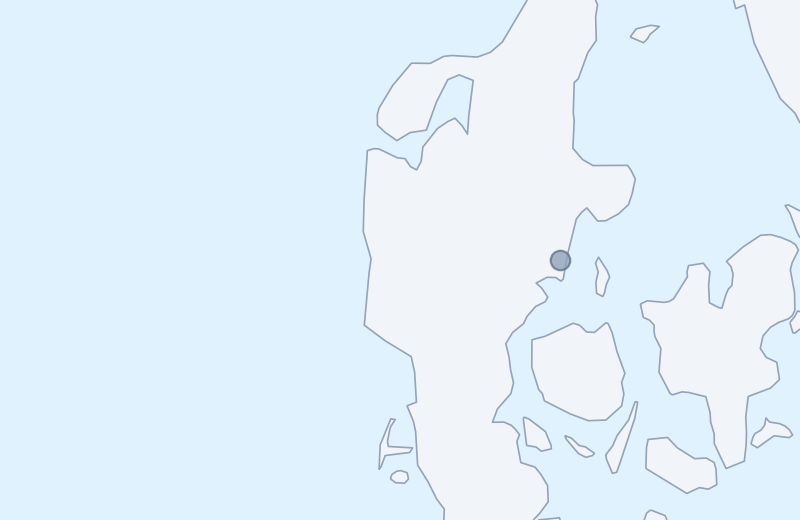
Tunø Knob Offshore Wind Farm is a small, early demonstration-scale park sited on the Tunø Knob sandbar in the Bay of Aarhus, Denmark. Commissioned in 1995, it comprises ten Vestas V39 machines (500 kW each) giving a nominal 5 MW nameplate capacity and is located roughly 5–6 km offshore in shallow (circa 3–7 m) water. The project is historically significant as one of the world’s first operational offshore wind farms and as Vestas’s earliest offshore deployment. Built as a demonstration to study environmental and operational aspects of offshore turbines, early monitoring showed production above expectations in the first months of operation, and the installation helped establish practical approaches to foundations, cabling and remote monitoring for subsequent Danish projects. Construction employed concrete/box-caisson style foundations suited to the shallow sandbar site. Over its operational life the asset has passed through different corporate lists (historical sources cite DONG/Ørsted and Midtkraft in developer/owner roles) and has been locally operated in recent records by Eurowind; however, detailed corporate transfer documentation is not present in the sources consulted. The wind farm’s modest scale and longevity make it a reference case in industry discussions about early offshore design choices, long-term availability, and the value of demonstration projects for maturing offshore wind logistics and maintenance practices.
Concrete box-caisson (gravity-base) foundations supporting the 10 Vestas V39 turbines in shallow water (reported depths ~3–7 m).
Lease & Site Conditions
5 fields
Lease reference
Tunø Knob (1995 ministerial direct order)
Water depth
3–7m
Distance from shore
6km
Soil type
sand / sandbar (sandy reef)
Operations & maintenance
O&M comments
Nearshore site (reported distance to shore/cable to shore ~5.5–6 km). Historic remote monitoring at Tunø Knob used radio-chain links (also used at Vindeby). Operator listed as Eurowind in multiple industry sources. No authoritative source found that specifies the transmission ownership model, onshore grid substation name, landfall beach, or an offshore substation/OSS.
Wikipedia lists a construction cost of £10m. The source does not state an explicit price-base or whether this includes transmission/DEVEX; likely the nominal construction cost reported at time of commissioning...
1 Cost inflated in local currency then converted to euros (where applicable).
Cable Specifications
5 fields
Tunø Knob export cable
1 × 12 kV MVAC · 5 MVA · 5.5 km
System:1 × 12 kV MVAC
Power rating:5 MVA
Route length:5.5 km(5.5 subsea)
Burial depth:
Submarine power from Danish offshore wind farms, including Tunø Knob, is transmitted via submarine cables buried in the seabed between turbines and via an export cable leading power to shore;...
Fibre optic:
No fibre-optic subsea cable provision is reported for Tunø Knob in the available sources; historical project descriptions state that remote monitoring at Tunø Knob (and nearby Vindeby) used radio-chain connections...
Onshore Substations
2 fields
Onshore Substation (DK)
Odder, Denmark, Denmark
Rating
5 MW · 10 kV
Location
onshore
Location
Supply Chain (0)
Project Timeline 5 events
1995Actual5 events
The Tunø Knob Offshore Wind Farm in the Bay of Aarhus, Denmark, entered full commercial operation in 1995. The project, consisting of 10 Vestas V39-500 kW turbines on shallow-water concrete foundations, was commissioned that year and began operational service as Denmark’s second offshore wind farm and Vestas’ first offshore wind project, with early production reported as higher than expected.